Several NAWP members attended the 19th European Women Pharmacists Meeting in Vienna on 4 October 2025. The theme was: Diversify Pharmacy: Extending Roles of Women Pharmacists.
These European meetings are atypical of pharmacy events in many ways, one of which is the absence of declared Learning Objectives (LO). Attendees are considered competent to set their own and take from the meeting whatever suits them best. However, one implicit universal LO for all the European Women Pharmacist Meetings is for attendees to broaden their knowledge base of pharmacy by sharing experiences from across geographical Europe. The conference language is always English.
About ten current or retired women pharmacists from the UK attended the meeting. It followed the normal format of a Saturday all-day session with talks on the meeting topic plus an optional social programme. This year, it included a visit to a winery with supper on Friday evening, a dinner at the Vienna town hall on Saturday evening and a city walking tour on Sunday morning. Friends or relatives accompanying attendees were invited to join the social programme.
The first of the Saturday talks, titled ‘How to build the pharmacist of the future; early years experiential learning – a Northern Ireland perspective’, was given by Roisin O’Hare, of Queen’s University Belfast. This Lego-illustrated talk lived up to its title, with parts of the content being especially welcomed by UK attendees. The mechanics, detail and implications of the re-formatted UK pharmacy courses being followed by those graduating in 2026 became a lot clearer to us than they had been previously. It was also good to hear that the UK is a leader in promoting front-line clinical roles for pharmacists.
The topic of medicines regulation was the theme of the second talk, titled ‘Behind the Scenes: my Journey through the World of the Austrian Medicines Regulatory Authority’ given by Olga Rögelsperger, from the Austrian medicines’ regulator. The procedures for new product registration and subsequent pharmacovigilance were explained, along with approaches to shortages and stockpiling. Attendees heard that the percentage of adverse reactions formally reported is estimated at only 10%. This worldwide problem makes rare side effects particularly hard to evaluate. Questions and comments after the talk inevitably included the influence of social media, which is often negative, and of unhelpful comments by public figures. The consensus was that both national healthcare organisations and individual health professionals, including pharmacists, needed to play an active role to dispel misinformation by educating and reassuring the public.
Something quite different was offered in a talk on ‘Being a Lifestyle Pharmacist’ by Nienke Oosterhof, from the Netherlands. This covered the role of a balanced life in preventing and managing medical conditions. She suggested that six factors needed to be in balance: nutrition, exercise, relaxation, sleep, substances, and connection. ‘Substances’ includes all xenobiotics, including psychoactive ones, and ‘connection’ includes all types of social interaction and engagement. Whereas in the past, poor hygiene was the major cause of poor health in human society, this has been replaced by a poor lifestyle. As with many scenarios, educating patients is one way that pharmacists can help. For some of the six factors though, there has to be support within communities, and although pharmacists can take a lead, voluntary structures may need to be built up.
Different again was the final talk, titled ‘My Career and Side Effects’ by Virginia Watson, from the UK. Starting in the 1970s, the talk followed Virginia’s career trajectory within her personal life, concluding around 2015. Most time was spent in industry focusing on medical writing, but with breaks and episodes in community. Her career spanned decades of huge change in medicines’ regulation, but even more dramatic changes in attitudes, pay, equality law, and benefits affecting women in the workplace. Two themes were evident, leading to a clear message: although times and circumstances change, grasping opportunities when they come along is a key part of having a fulfilling career.
A panel discussion followed, emphasising the diversity of careers that pharmacists can have.
Thereafter, attendees were given a key date for their diaries. The 2026 meeting will be held on 27 June, titled ‘Women Pharmacists’ Struggle for Gender Equality – Past, Present and Future’. It will be a satellite meeting within the centenary meeting of the German Association of Women Academics (Deutscher Akademikerinnenbunde. V., DAB), 26 to 28 June 2026.
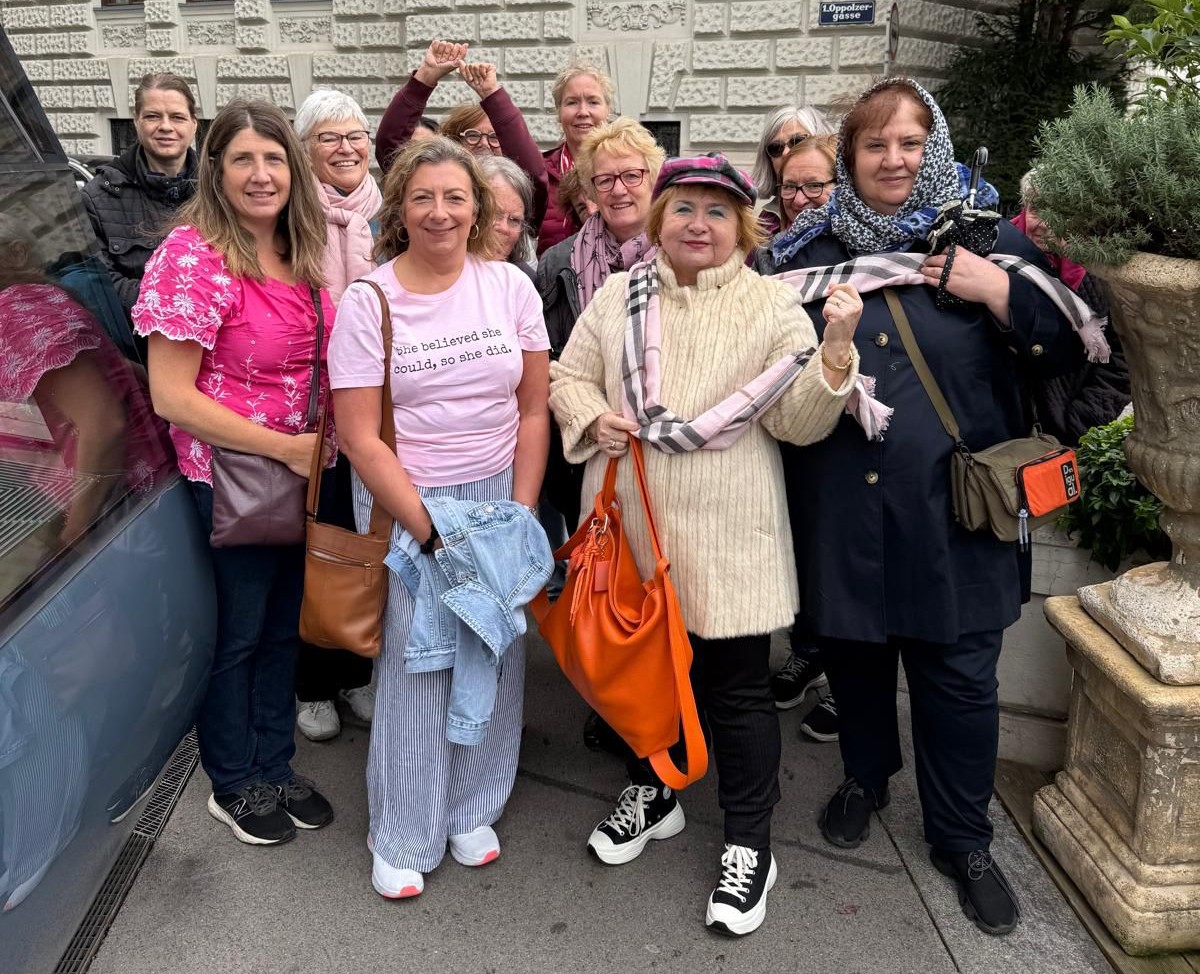
EWPM 19th meeting in Vienna
By Dr Christine Heading, Past President of NAWP
Get Involved
- Follow the PDA NAWP Network on social media using the hashtag #PDAnawp
- For more information about the PDA NAWP Network, click here.
- If you would like to get involved with the network and its activities, please email: [email protected]
Learn more
- 19th European Women Pharmacists Meeting
- European Women Pharmacists Facebook Group
- NAWP attends the 18th European Women Pharmacists Meeting
Not yet a PDA member?
If you have not yet joined the PDA, we encourage you to join today and ask your colleagues to do the same.
Membership is FREE to pharmacy students, trainee pharmacists, and for the first three months of being newly qualified.
Read about our key member benefits here.