In January 2020, NAWP started its 115th year of enabling all women pharmacists to realise their full potential and raise their profile by being educationally, socially, and politically active. NAWP became part of the PDA forming the PDA NAWP Network and becoming our first EDI Network. In April 2020, we launched three further networks, the PDA BAME Network, the PDA Ability Network, and the PDA LGBT+ Network. We encourage all PDA members to get involved in the networks that are of interest to them.
In this issue:
- Consent or confusion? Exploring the realities of informed consent in practice
- 10 practical ways to look after your wellbeing when you can’t leave the pharmacy
- PDA Ability Network focuses on neurodivergence
- Being Black in the workplace
- Black History Month at NHS Fife
- Bridging the gap: how pharmacy research can deliver more equitable cancer care
- PDA LGBT+ Network committee calls for a review of gender affirming care
- NAWP attends the 19th European Women Pharmacists Meeting in Vienna
- NAWP raises money for Wear It Pink
- Morning sickness, is pharmacy giving the best care?
- In case you missed it
- Get involved
Consent or confusion? Exploring the realities of informed consent in practice
By Sima Hassan, Senior Lecturer at Aston University
The total cost of medical negligence payouts by the NHS in 2024–25 is estimated at £60 billion, including cases related to consent. This figure has quadrupled since 2006–07, reflecting a significant and ongoing rise in clinical negligence claims.
So, why is consent often so confusing for both patients and pharmacists? What must pharmacy professionals do to ensure the consent they obtain is valid and can be upheld in court?
Consent can take many forms: it may be given explicitly by the person, such as in writing or implied through a person’s actions or circumstances. Pharmacy professionals must use their professional judgment to determine when implied consent is appropriate and when it is not. In making this decision, they should consider legal requirements, NHS service specifications, and their workplace policies. If there is any uncertainty about whether consent has been given, explicit consent should be obtained. Ultimately, obtaining valid consent is both a legal and a professional duty of care owed to the patient.
10 practical ways to look after your wellbeing when you can’t leave the pharmacy
Recently, I’ve been visiting my local pharmacy more often. Large numbers of prescriptions are being dispensed every day, patients are being supported with a variety of conditions, and an ever-growing range of services are being provided, alongside extended opening hours being offered to my local community.
This is, of course, a particularly busy time of year with flu season upon us, and many pharmacists are providing vaccinations alongside these other services, often with targets attached.
On top of this, ongoing challenges, such as staffing shortages, rising workloads, and difficult encounters with patients or colleagues, are ever present, and increasing levels of stress and fatigue for pharmacists.
And for many of you, stepping out of the pharmacy during the day may not be possible, making it even harder to take a break and switch off from the pressures of the job, even for just a few moments.
PDA Ability Network focuses on neurodivergence
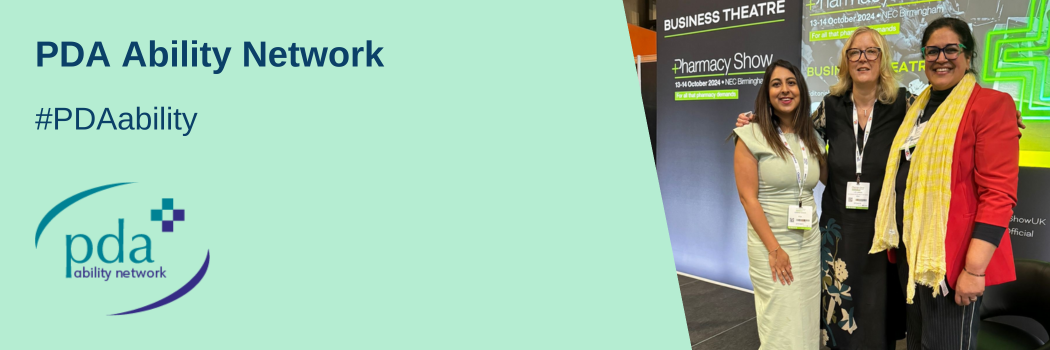
The PDA Ability Network has met three times since the summer to discuss the issue of neurodiversity. A number of members of the network are neurodivergent, and many find that their condition is discovered in adulthood. Furthermore, some members have pointed out that they may be neurodivergent in more than one way, such as having ADHD and autism, known as ‘AuDHD’.
The network has produced a briefing on neurodiversity. It outlines the common neurodivergent conditions and possible reasonable adjustments that could be made by the employer to assist the employee. This is only a basic guide to start the discussion, as adjustments will be unique and individual to each person.
The guide also outlines the expectations and duties of employers to accommodate the needs of those staff to enable them to fully participate in the workplace.
Finally, we need to be reminded that whilst neurodivergence may be regarded as a disability, it can also be seen by some as a ‘super power’, as it enables a different way of thinking which brings real benefit to organisations.
Being Black in the workplace
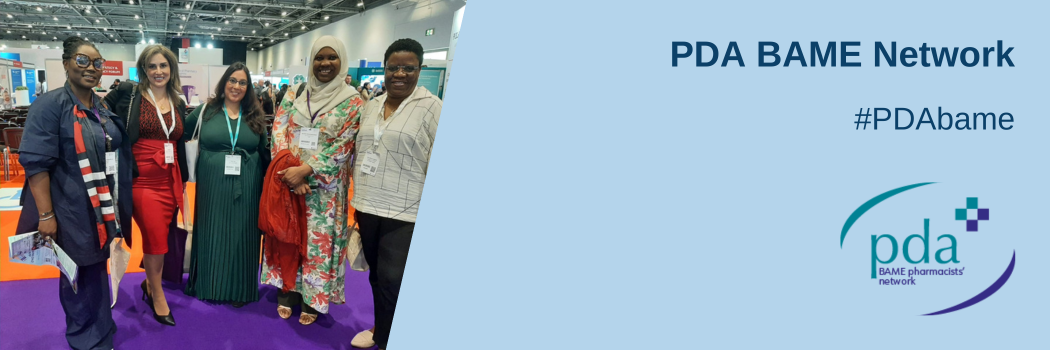
Black History Month is a time to reflect on the legacies that shape us, to honour resilience, and to speak honestly about the lived realities of being Black in Britain today. For me, those realities are lived daily in the private security industry an industry I have devoted decades of my life to, but one that too often still places Black men and women at the margins or uses us only when it suits a certain image.
I want to share two stories. They are not abstract, academic, or second-hand. They are mine. They are raw. And they expose the challenges many Black security professionals still face, challenges that remain invisible to most of the public.
Story One: The Fashion Week Job That Never Happened
A few years ago, I was booked to work a high-profile London Fashion Week job for a major international brand. The requirement? Ex-military men with professional credentials. I submitted my CV, solid, qualified, experienced. Approved.
The night before the job, an email landed: “Ensure you have a neat haircut, clean shaven or, if you have facial hair, ensure it is well-groomed.” On the surface, that seems reasonable. Presentation matters. But for Black men in security, grooming often becomes a coded gatekeeping tool.
Black History Month at NHS Fife
By Sade Abiola, hospital pharmacist, PDA Workplace Rep at NHS Fife, BAME Network member, and STUC Black Workers’ Committee member
On 1 October, we had a stand at the NHS Fife Victoria Hospital. The stand included a variety of different resources highlighting sickle cell disease, tokenism, and events to do with Black History Month within Scotland. We also had information about Black British people.
On 8 October, we tried to spread a few of the recipes we have within West Africa. We had fried rice and were happy to say it sold out and went down well with our colleagues on both sites.
On 15 October, the Charge Nurse championed an event on the ward for staff and patients. We did all the cooking and there were music and dancing!
Bridging the gap: how pharmacy research can deliver more equitable cancer care
When I became a pharmacist eleven years ago, I could not have imagined that my journey would one day lead me toward research aimed at understanding and improving the experiences of patients from diverse backgrounds. Today, I am building my skills at the intersection of pharmacy and research, preparing to explore how healthcare systems can better serve the communities they reach.
My career began in hospital oncology, a field that constantly evolves as new treatments extend and improve patients’ lives. This environment inspired me to ask questions and seek improvements. While studying for my Clinical Pharmacy Diploma, I led audits and quality improvement projects. These experiences strengthened my skills in data collection, analysis, and reflection. This foundation sparked my interest in research and helped me begin to shape my professional identity and purpose. I realised that pharmacists could apply their clinical knowledge and transferable skills in many ways, contributing to research, education, policy, and service development, to improve patient care and influence how healthcare is delivered.
In 2021, I was awarded a Health Education England Clinical Academic Research Internship. I developed my research skills and learned the value of collaboration. A year later, I became the first pharmacist in my Trust to secure a Pre-Doctoral Fellowship funded by the Royal Marsden Hospital Charity. This strengthened my leadership and shaped a new line of inquiry into optimising the experiences of ethnic minority patients receiving systemic anticancer therapy. Findings were published in BMJ Quality & Safety and presented at the Oncology Professional Care Conference, highlighting overlooked patient experiences and the importance of responsive cancer care. This work showed me that pharmacy careers can extend into innovation, service design, and leadership.
PDA LGBT+ Network committee calls for a review of gender affirming care
The Cass Review emphasised the need for additional psychological support for trans youth, which we agree is a positive outcome.
However, the Cass Review failed to appropriately review a plethora of evidence as part of its collection of systematic reviews and evidence-generation activities. These included international guidance set by the World Professional Association for Transgender Health (WPATH), national guidance set by French paediatric endocrinology experts, a New South Wales Health Ministry-commissioned evidence review and more.
The Cass Review focused on potential harm to transgender youth accessing GnRH (gonadotropin-releasing hormone agonists), also known as ‘puberty blockers’. Following its publication, further analysis has identified that the Cass Review dismissed evidence, yet does not provide a reason as to why the evidence that was included, considered weak, or to what extent certain contributions constituted acceptable or strong forms of evidence. The implication of this is that there is a high risk of bias within the Cass Review, as there is a lack of a framework towards assessing evidence as a group of multinational researchers highlighted.
NAWP attends the 19th European Women Pharmacists Meeting in Vienna
By Dr Christine Heading, Past President of NAWP
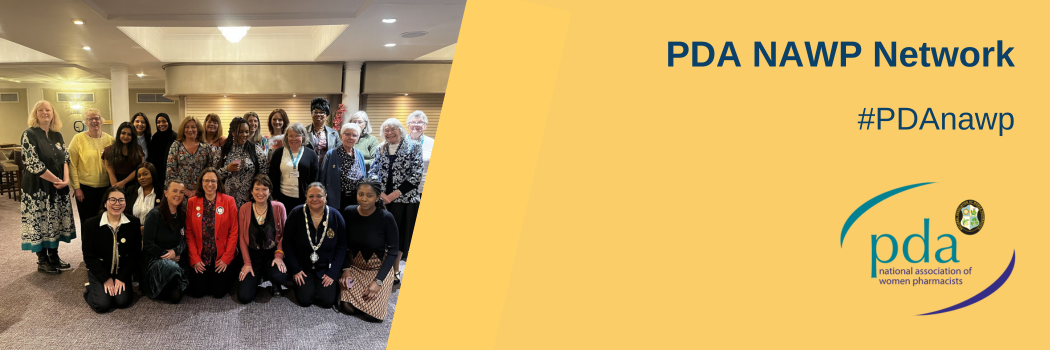
These European meetings are atypical of pharmacy events in many ways, one of which is the absence of declared Learning Objectives (LO). Attendees are considered competent to set their own and take from the meeting whatever suits them best. However, one implicit universal LO for all the European Women Pharmacist Meetings is for attendees to broaden their knowledge base of pharmacy by sharing experiences from across geographical Europe. The conference language is always English.
About ten current or retired women pharmacists from the UK attended the meeting. It followed the normal format of a Saturday all-day session with talks on the meeting topic plus an optional social programme. This year, it included a visit to a winery with supper on Friday evening, a dinner at the Vienna town hall on Saturday evening and a city walking tour on Sunday morning. Friends or relatives accompanying attendees were invited to join the social programme.
NAWP raises money for Wear It Pink
Last month, the PDA NAWP Network participated inWear it Pink 2025. The charity event, held on Friday 24 October, raises money and awareness forBreast Cancer Nowand is one of the biggest fundraising events of the year.
The network raised £225 this year and put together aposterof their photos to show their support and raise awareness.
Lourette Latif Philips, the President of the PDA NAWP Network said,“On behalf of the NAWP Network, I would like to extend my heartfelt thanks to NAWP and PDA team members who participated in the Breast Cancer awareness campaign. This campaign is more than just raising awareness – it is a movement that empowers individuals with knowledge and supports those affected by breast cancer. Your generous donations are helping to drive continued progress in research and treatment. Together, we are breaking the silence, challenging stigma, and promoting early detection that saves lives. Together, we are making a difference – one step closer to a future without breast cancer.”
The PDA NAWP Network has taken part in the annual charity event since 2021 and has raised a total of £1,045 for Breast Cancer Now.
Morning sickness, is pharmacy giving the best care?
By Siobhan Abrahams, advanced pharmacist for Virtual Wards, pharmacist advisor, and PDA NAWP Network member
The inquest into the deaths of Jess Cronshaw and subsequently her daughter, Elsie, in East Lancashire was reported earlier this year. Jess died as a result of taking her own life due to poorly controlled Hyperemesis Gravidarum. This has highlighted within pharmacy that we may need to do more to support pregnant women who struggle with this condition.
The Royal College of Obstetricians and Gynaecologists have a very detailed ‘Green-top Guideline No. 69’ which covers the ‘Management of Nausea and Vomiting in Pregnancy and Hyperemesis Gravidarum (HG)’. Nausea and Vomiting in Pregnancy (NVP) affects up to 90% of pregnant women and is one of the most common indications for hospital admission among pregnant women, with the estimated cost to the NHS of £62million per year. The lay term for NVP is often ‘morning sickness’, which can be felt to trivialise the condition. HG is a severe form of NVP which affects about 3.6% of pregnant women, but this figure may be an underestimate.
Since the Medicines and Healthcare products Regulatory Agency (MHRA) alert in January 2020, which stated that there is an increased risk of the baby having a cleft lip and/or palate if ondansetron is used within the first trimester, there is a fear in non-specialist primary or secondary care of prescribing and dispensing this medication for pregnant women. However, the UK Teratology Information Service said in January 2025 that, as ondansetron is one of the most studied antiemetics in pregnancy, we can interrogate the data and have more certainty in the pregnancy safety profile. They noted that the cleft palate data is conflicting, and the highest quality study suggests that the absolute risk is very low with a background rate of 11 per 10,000 versus the ondansetron-exposed rate of 14 per 10,000.
In case you missed it
- Celebrating 5 years of the PDA EDI Networks
- 120 years of empowering women in pharmacy
- PDA responds to disability and ethnicity pay gap reporting
- Jyoti Buxani elected as the first President of the PDA Ability Network
- PDA Ability Network launches Neurodiversity factsheet
- Sir Keir Starmer responds to the PDA BAME Network’s letter regarding the Immigration White Paper
- PDA BAME Network comments on flag displays linked to the ‘Raise the Colours’ campaign
- Adam Somerville elected as the 3rd President of the PDA LGBT+ Network
- PDA LGBT+ Network marches at Manchester Pride 2025
- PDA NAWP attends Fawcett Society event on combating racism and misogynoir
- Breaking barriers: Encouraging young women to lead in pharmacy
Get involved
Membership of the PDA’s EDI Networks is open to all UK pharmacists, former pharmacists (e.g. retired or taking a career break), and all UK pharmacy students and trainee pharmacists. This is regardless of age, race, gender, sexual identity, disability, nationality, hours worked, or employment status. Pharmacists do not need to identify as BAME, disabled, LGBT+, or as women in order to join those networks. All networks welcome allies, people who will support equality and fairness for all.
You do not need to be a member of the PDA to join, though PDA members do benefit from a discounted membership fee. PDA members can join a network for £10 per year, retired members for £20 per year, and non-PDA members for £30 per year. In accordance with our support for future pharmacists, membership of the networks is FREE for PDA student members and trainees (PDA student and trainee membership is also FREE).
- Join the PDA Ability Network
- Join the PDA BAME Network
- Join the PDA LGBT+ Network
- Join the PDA NAWP Network
- Follow the PDA EDI Networks on social media using the hashtags,#PDAability, #PDAbame, #PDAlgbt, and #PDAnawp.